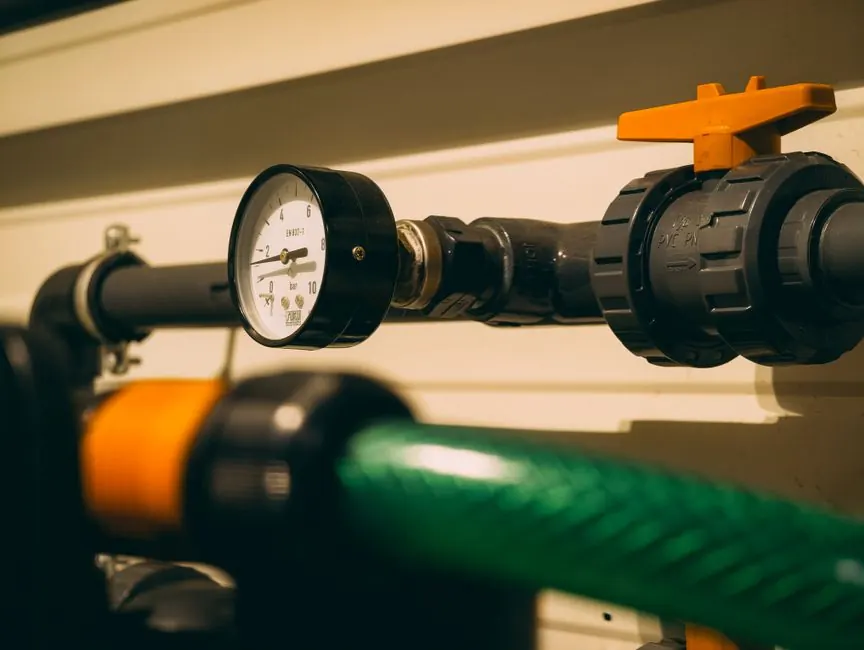
You prevent pipes from freezing in Berwyn by keeping heat in the building and out of the pipes: hold indoor temperatures at 55°F or higher, insulate every pipe that runs through an exterior wall, crawlspace, or unheated attic, and drip vulnerable faucets when the overnight low drops below 20°F. The single most effective habit is letting a pencil-thin stream run on the fixtures that sit against outside walls - that moving water is far harder to freeze than water sitting still in a pipe.
Berwyn's housing stock makes this more urgent than it sounds. Most of the bungalows and two-flats here were built between 1900 and 1950, and a lot of them still have pipes running through unheated porches, soffits, and rim joists. When we get a stretch of single-digit nights off Lake Michigan, those are the lines that go first. This guide covers why it happens, what to set your thermostat to, how to insulate, and when to call us instead of guessing.
Why Berwyn pipes freeze so easily
Berwyn pipes freeze easily because a large share of the city's plumbing was roughed in before modern insulation standards, and much of it sits in unconditioned space. A pipe does not need to be outside to freeze - it only needs to be in a spot that drops below 32°F for a few hours. In Berwyn, that means the pipes under kitchen sinks on exterior walls, the supply lines feeding hose bibs, and anything running through a closed-off attic or an unheated basement stairwell.
Water has a strange property: it expands about 9% when it turns to ice. That expansion is what splits copper, cracks galvanized steel, and blows the crimp rings off PEX. The pipe often does not leak while it is frozen. It leaks when it thaws and the pressure is released - which is why so many Berwyn homeowners wake up to water on the floor the morning after a cold snap breaks.
If you have already had a line let go this season, our team handles emergency pipe repair Berwyn around the clock, and we can usually tell you on the phone whether it is a freeze or a true burst before we arrive.
What temperature should you keep your house at?
Keep your thermostat at 55°F minimum when you are home or away, and 68°F is a better target during a hard freeze. The 55°F floor is not a suggestion - it is the point below which the air inside your walls starts pulling heat out of the pipes faster than the furnace can replace it. During a Berwyn cold snap where the overnight low hits -5°F, we recommend bumping the daytime setting to 68°F and the nighttime setting no lower than 62°F.
Two details matter more than the number:
- Do not lower the thermostat at night during a freeze. The energy you save is a few dollars; a burst pipe is thousands.
- Keep cabinet doors open under sinks on exterior walls. Kitchen and bathroom cabinets trap cold air against the pipes. Opening the doors lets room air circulate and can raise the temperature around the trap by 10°F or more.
If you leave town for the holidays, do not shut the heat off. Set it to 55°F and have someone check the house every few days. We have walked into far too many Berwyn homes in January where a two-week vacation turned into a flooded first floor.
Should you drip faucets to prevent frozen pipes in Berwyn?
Yes - dripping faucets is one of the most reliable ways to prevent frozen pipes in Berwyn, Illinois, and it costs only a few dollars over a cold week. A slow drip or a pencil-thin stream keeps water moving through the pipe, and moving water resists freezing far better than standing water. The trick is knowing which faucets to drip.
Drip the fixtures that sit against exterior walls, and drip the one farthest from where the water main enters the house. That farthest fixture pulls fresh, slightly warmer water from the main through the whole run of pipe. If you have a two-flat, drip a faucet on each floor. If you have a bathroom over an unheated porch, that is the one to prioritize.
How much water are we talking about? A steady drip overnight uses roughly 15 to 30 gallons. At Berwyn water rates, that is a couple of dollars - cheap insurance against a $3,000 to $8,000 repair. Typical 2026 pricing for a burst pipe repair in this area runs $500 to $1,500 for a single accessible line, and much more if a wall or ceiling has to be opened.
Insulate pipes before the first hard freeze
Insulating pipes in Berwyn is the highest-return project you can do in October, and most homeowners can handle the accessible runs themselves. The goal is to wrap every pipe that passes through an unheated space with closed-cell foam insulation - the gray or black tubular sleeves sold at any hardware store. A 6-foot length of 1/2-inch foam pipe insulation costs about $3 to $5, and a typical bungalow needs 20 to 40 feet of it.
Where to focus, in order of risk:
- Pipes in the basement rim joist area, where the wood sill meets the foundation.
- Supply lines under kitchen and bathroom sinks on exterior walls.
- Any pipe running through a crawlspace, unheated porch, or attic.
- Outdoor hose bib supply lines, which often have a shutoff valve inside the wall.
If your home still has the original galvanized steel supply lines, insulation helps but does not solve the underlying problem. Galvanized pipe corrodes from the inside out, and a pipe that is already half-closed with rust is far more likely to split when it freezes. If you are seeing rusty water or low pressure on the cold side, it may be time to talk about galvanized plumbing repair Berwyn before winter makes the decision for you.
For pipes you cannot reach - inside finished walls, under a tiled floor, or behind a soffit - we use heat cable and foam together. If you are not sure which lines are exposed, a water leak detection Berwyn inspection in the fall can map the risky runs before the first freeze.
Winterize pipes Berwyn IL: the outdoor checklist
Winterizing pipes in Berwyn IL starts outside, because the outdoor spigots are the first thing to freeze and the easiest to protect. Before the first hard freeze - usually late October or early November in this part of Cook County - do these four things:
- Disconnect every garden hose. A hose left connected traps water in the bib and the pipe behind it.
- Shut off the interior valve feeding each hose bib, then open the outdoor spigot to drain it. If your home does not have an interior shutoff, this is the year to add one.
- Drain and store sprinkler lines and any irrigation. Water left in a sprinkler zone will crack the pipe at the first freeze.
- Check the exterior foundation for cracks or open vents. Cold air pouring into a basement through an open crawlspace vent will find the nearest pipe.
If you live in one of the older bungalows near the Burst Pipe Repair in Depot District blocks, pay extra attention to the pipes that run along the front porch ceiling. Those lines sit in unconditioned air and are the ones we get called about most in January.
Common mistakes that lead to frozen pipes
The most common mistake we see in Berwyn is closing off the heat to a room that contains plumbing. Homeowners shut the door to a spare bedroom or an unused bathroom to save on heating, not realizing the supply line for that room runs along an exterior wall. That room drops to 35°F, and the pipe follows.
Other mistakes that show up every winter:
- Turning the thermostat down too far before a trip. Anything below 55°F is gambling.
- Using a space heater in a closed, unheated room. It warms the air but not the pipe inside the wall, and it is a fire risk.
- Pouring boiling water on a frozen pipe. Thermal shock cracks copper and can scald you. Use a hair dryer or a heat gun on low, moving constantly.
- Ignoring a slow drain. A partially blocked drain freezes faster because water sits in the trap longer.
- Assuming PEX cannot freeze. PEX flexes better than copper, but it still splits at the fittings.
If you catch a pipe that is frozen but not yet burst, do not panic. Turn the faucet on so melting water has somewhere to go, then warm the pipe gradually from the end closest to the faucet. If you cannot reach the frozen section, our pipe thawing Berwyn service uses controlled heat and a thermal camera to thaw the line without torching your framing.
When to call a professional
Call a professional when you cannot find the frozen section, when the pipe is inside a finished wall or ceiling, or when you see any sign of water where it should not be. Those three situations are where DIY thawing turns into a much larger repair. If you have already heard the telltale pop of a split pipe, shut off the main water valve immediately and call us.
We handle the whole job: locate the freeze or break, thaw or replace the affected section, test the line under pressure, and dry out any water that got into the structure. If a pipe has split, we can often replace just the damaged section rather than the whole run - our pipe section repair Berwyn work is usually a same-day fix on accessible lines. And if water has already reached drywall or a ceiling, we coordinate the water damage repair Berwyn IL so you are not left managing two contractors.
For homeowners in the Riverside area dealing with the same freeze issues we see across Berwyn, we also cover Burst Pipe Repair in Riverside with the same crew and the same response time.
If you want a second opinion before winter sets in, we offer a walkthrough of your exposed plumbing and a written list of what to insulate. That is a 30-minute visit, and it is the cheapest way we know to avoid a January emergency.
Frequently Asked Questions
How do I prevent pipes from freezing in Berwyn IL?
Keep your thermostat at 55°F or higher, insulate pipes in unheated spaces, and drip faucets on exterior walls when the overnight low drops below 20°F. Disconnect hoses and drain outdoor spigots before the first freeze. Those four steps prevent the vast majority of winter pipe bursts we see.
What temperature should I keep my house to prevent frozen pipes in Berwyn?
Set your thermostat to 55°F minimum, and 68°F during a hard freeze. Below 55°F, the air inside exterior walls pulls heat out of the pipes faster than the furnace replaces it. Never shut the heat off entirely if you leave town.
Should I drip faucets to prevent frozen pipes in Berwyn?
Yes. A pencil-thin stream on the faucet farthest from your water main keeps water moving through the whole run. Drip overnight when the low is below 20°F. It uses 15 to 30 gallons and costs a couple of dollars - far less than a burst pipe repair.
Who can help winterize pipes in Berwyn, Illinois?
Berwyn Pipe Rescue handles winterization walkthroughs, pipe insulation, and emergency thawing across Berwyn and the surrounding Cook County suburbs. We can inspect your exposed lines, recommend what to insulate, and be on call if a pipe freezes anyway.
How much does burst pipe repair cost in Berwyn in 2026?
Typical 2026 pricing runs $500 to $1,500 for a single accessible line, and $2,000 to $8,000 if a wall, ceiling, or floor has to be opened and dried. Water damage restoration is often the larger part of the bill, which is why prevention pays.
Get help with Burst Pipe Repair in Berwyn
If a pipe has already frozen or burst, or you want a professional winterization walkthrough before the next cold snap, call Berwyn Pipe Rescue at (708) 858-9675. We answer 24 hours a day, and we will tell you straight whether it is a freeze you can thaw yourself or a break that needs us on site.